
The Reef Authority is rejuvenating Pine Islet in the Percy Isles group with efforts underway to remove long-dilapidated buildings and return it to its natural state.
Pine Islet is one of 22 Commonwealth Islands managed by the Reef Authority within the Great Barrier Reef World Heritage Area. Access to the island has been restricted for many years due to the hazard posed by asbestos-clad buildings.
A tender has now been released to dismantle and remove the existing infrastructure, funded by the Australian Government’s Reef Trust through the Reef Islands Rehabilitation Project.
The Percy Isles, south-east of Mackay, are noted for their scenic beauty, with rocky headlands, hoop pine-dotted slopes, sheltered bays, sandy beaches and fringing reefs.
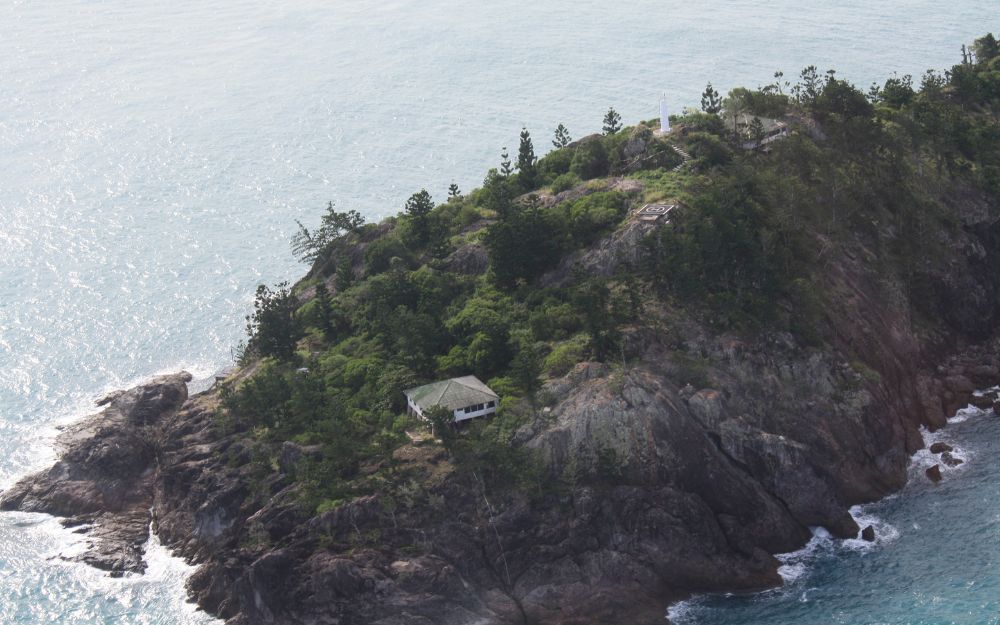
Reef Authority Commonwealth Island Program Manager Alicia Moisel said the project would allow Pine Islet to recover from decades of disturbance.
“Pine Islet has been heavily impacted by past use, cyclones, fire and the spread of weeds,” Ms Moisel said.
“Removing these dilapidated structures is a critical step in improving the island’s natural values, reducing health and safety risks, and improving our ability to manage the island into the future.”
The buildings are remnants of a lightstation constructed on Pine Islet by the colonial Queensland government in 1885. The original lighthouse was decommissioned in 1985 and replaced with an automatic solar-powered light, which had to be regularly serviced by AMSA personnel. The solar-powered light was considered surplus to requirements and decommissioned in 2017, removing the need for people to visit the island.
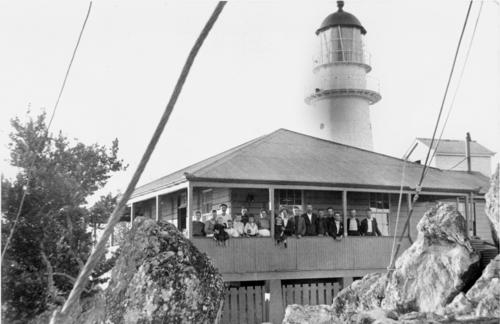
The historic lighthouse was dismantled in 1986, rebuilt at Mackay Harbour in 1996, and moved to Mackay Marina in 2022.
The original keepers’ cottages were replaced in 1927, with 3 fibro-clad cottages and several smaller structures. All these structures were clad with asbestos containing material.
The remaining structures are not heritage-listed but offer insight into an early chapter in Queensland’s maritime navigation history.
Ms Moisel said cleaning up the site would help protect neighbouring national park islands.
“The island is very weedy and increases the risk of invasive grasses and weeds spreading to nearby islands,” she said.
“Once the site is made safe, we’ll assess longer-term weed and vegetation management options, subject to available resources.”
The project is delivered in partnership with the Queensland Parks and Wildlife Service through the Reef Joint Field Management Program.
For interviews, stills and vision, click here: Pine Islet media package | Brandfolder
ENDS
Contact:
Great Barrier Reef Marine Park Authority | (07) 4750 0846 | media@gbrmpa.gov.au